
Security monitoring raises two questions. First: do we detect when something unusual happens? Second: when a new vulnerability affects our systems, do we know, and what do we do next? This article explains how we answer both with Wazuh, and how the platform works in practice.
What Wazuh is
Wazuh is an open-source platform that combines SIEM (security event management) and XDR (extended detection and response) functions. It is not a DLP product. Wazuh does not stop data leaks directly. It collects events, correlates them and raises alerts when activity departs from the normal pattern.
Main functions:
- Log analysis and correlation. Events from different systems are collected together and used to raise alerts.
- File integrity monitoring (FIM). Changes to system files and configuration are detected.
- Configuration assessment (SCA) and rootkit checks (Rootcheck). Deviations from security settings are detected.
- Agents and agentless devices. Agents run on Linux, Windows and macOS. Network devices can be monitored without an agent.
- Reporting. Dashboards and reports support requirements such as PCI DSS, NIST and HIPAA.
How we assess a vulnerability
A new vulnerability does not automatically mean it affects us. The assessment looks at three things:
- Does it affect a version we run? A vulnerability may apply only to certain kernel versions, distributions or settings.
- Can it be exploited in practice? Public exploitation is not always confirmed, but the severity still has to be assessed.
- What is the fix, and when is it available? Fixes differ by distribution and update channel.
Example: CVE-2026-98432
A vulnerability in the Linux kernel TCP stack, CVE-2026-98432, has been published. It is a use-after-free during the TCP handshake. The cause is a race condition in which option data stored for an incoming IPv4 connection can end up in the wrong state. The flaw has been present in the kernel since version 4.4.
Sources differ on some details, so check them yourself:
- Severity. The kernel CVE Numbering Authority (CNA) gives a CVSS 3.1 score of 9.8 (critical). One source gives 5.9. Check the current score at NVD and in your distribution’s security advisory.
- Fix. Fixes are available unevenly. Oracle published fixed packages for its kernel, and Ubuntu has placed a fix in its proposed (testing) channel. Check your system’s security advisory.
- Interim mitigation. Some sources mention the setting
net.ipv4.tcp_migrate_req=0. It is only a partial measure and does not replace the update. Check its effect before using it. - Exploitation. No public exploitation in the wild has been confirmed.
Wazuh in practice
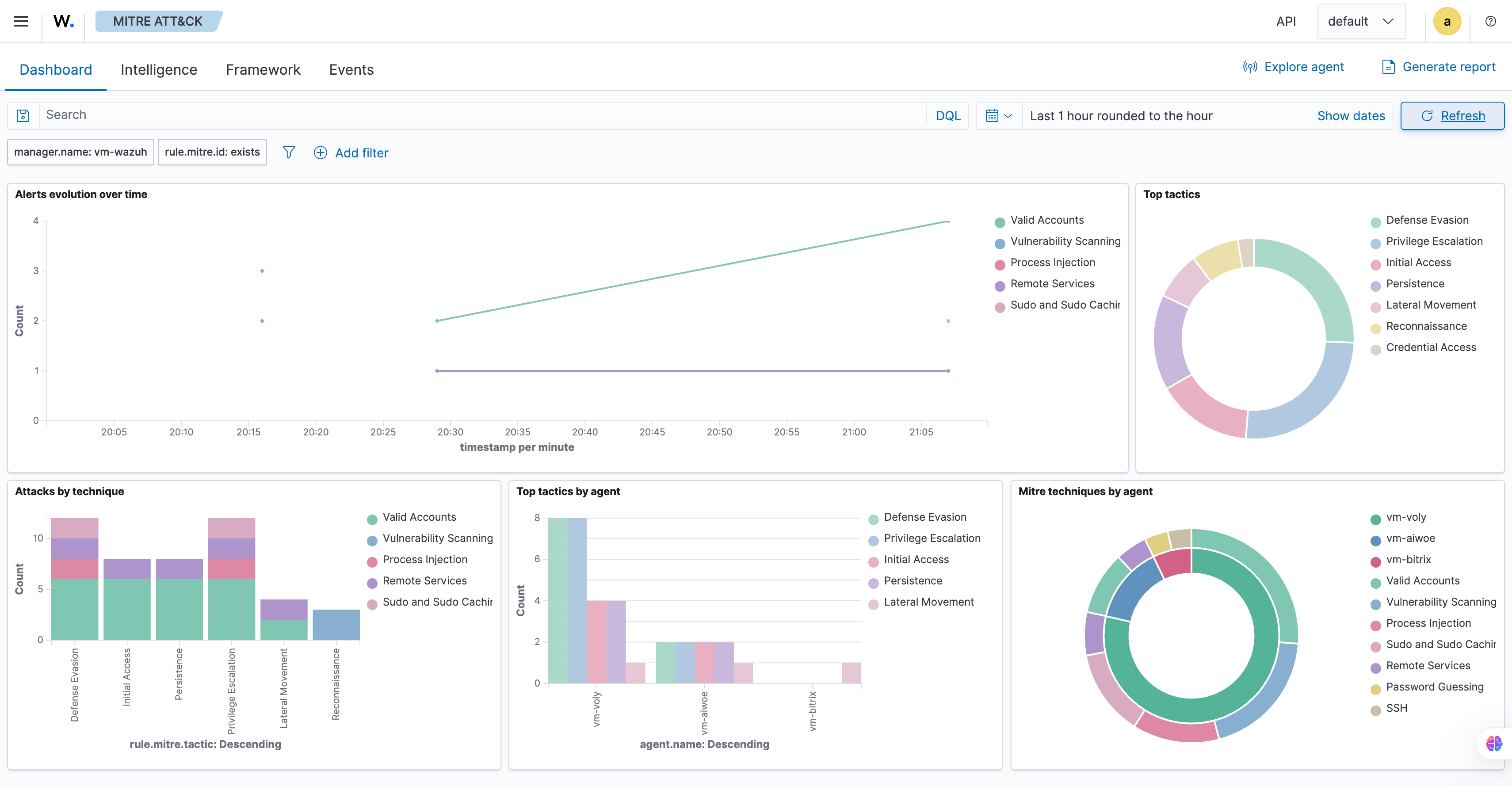
Figure 1: MITRE ATT&CK dashboard: alert trends over time, tactics and techniques per agent.
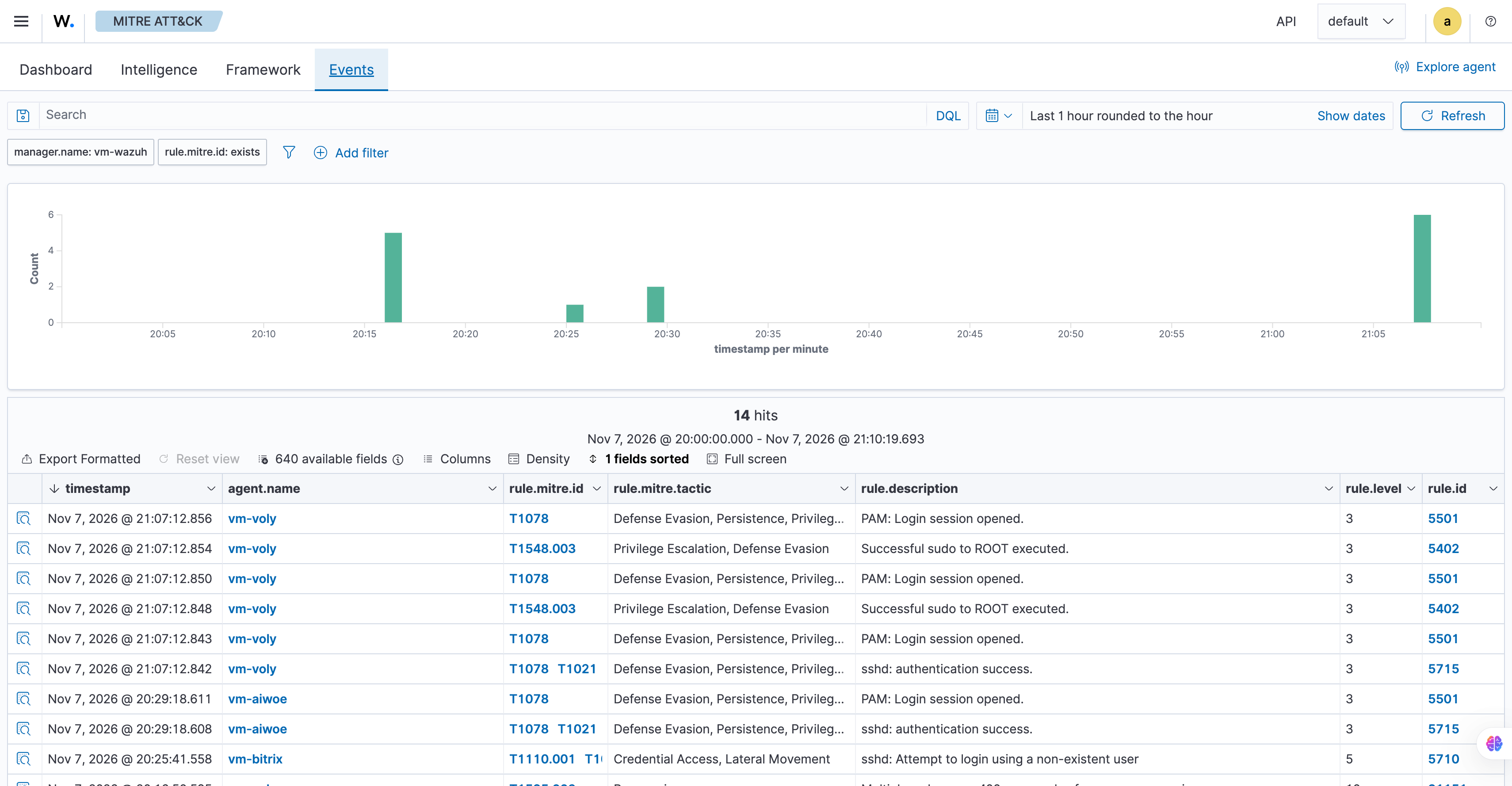
Figure 2: MITRE ATT&CK events: timeline and individual alerts with technique IDs.
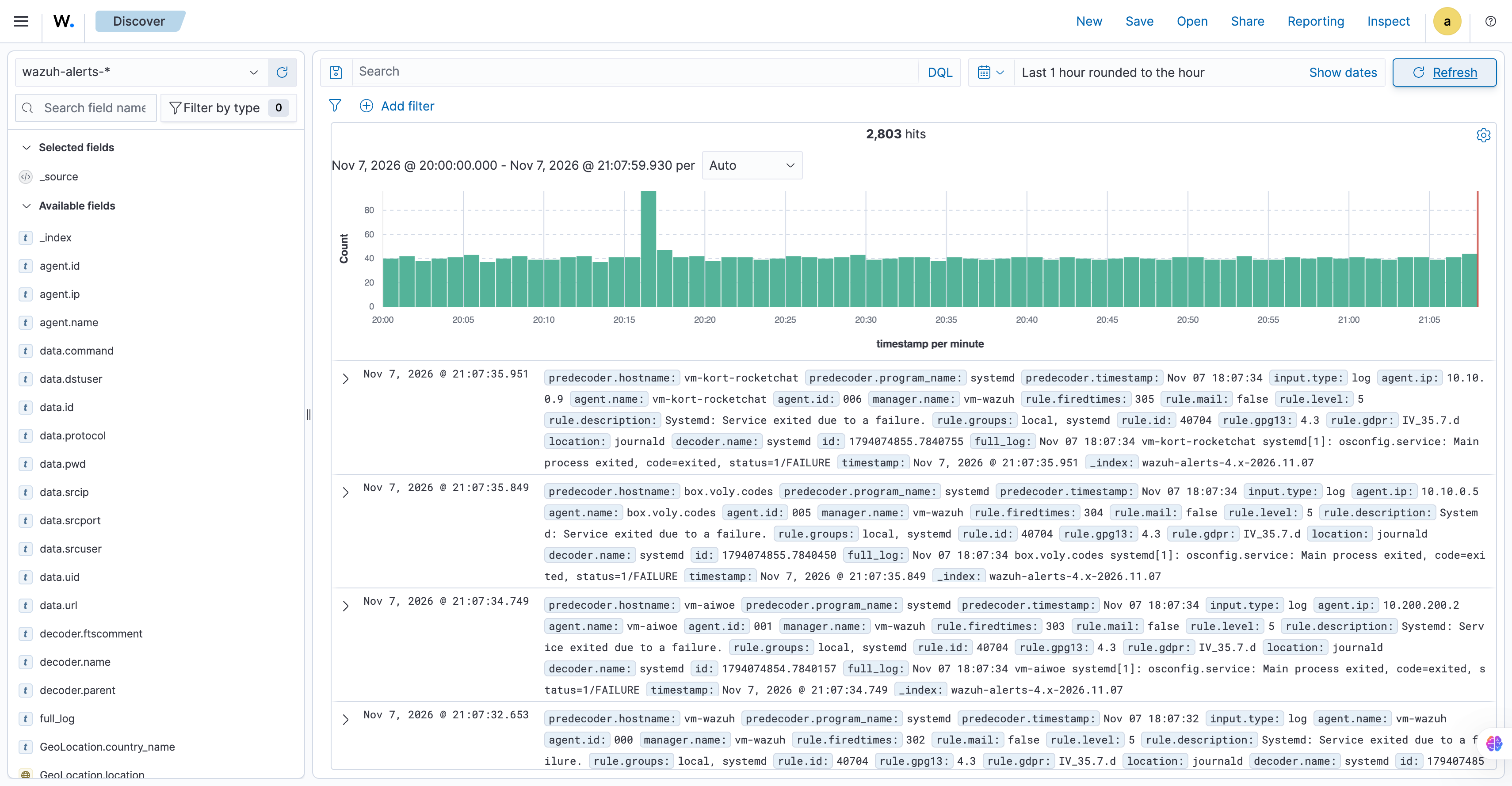
Figure 3: Discover: event stream from all agents and field filtering.
How Wazuh supports this work
Wazuh monitoring shows what is installed on our systems and what happens on them. When a new vulnerability is published, we can check whether it applies to our environment and prioritise the updates. Vulnerabilities of this kind are among those we watch with Wazuh monitoring.
Wazuh does not replace updates. It helps us see where an update is needed and where there are deviations.
Who works on this
This is not a certified service — we do not claim ISO 27001 or SOC 2. What we can show is a professional credential of the person who set up and runs this monitoring: the IBM Cybersecurity Analyst professional certificate (Coursera/IBM, 8 courses: cybersecurity tools, OS and network security, compliance, penetration testing, incident response and forensics, threat intelligence), completed 23 July 2021. It is several years old at this point and does not stand in for a current audit of our systems; it is background, not a guarantee.
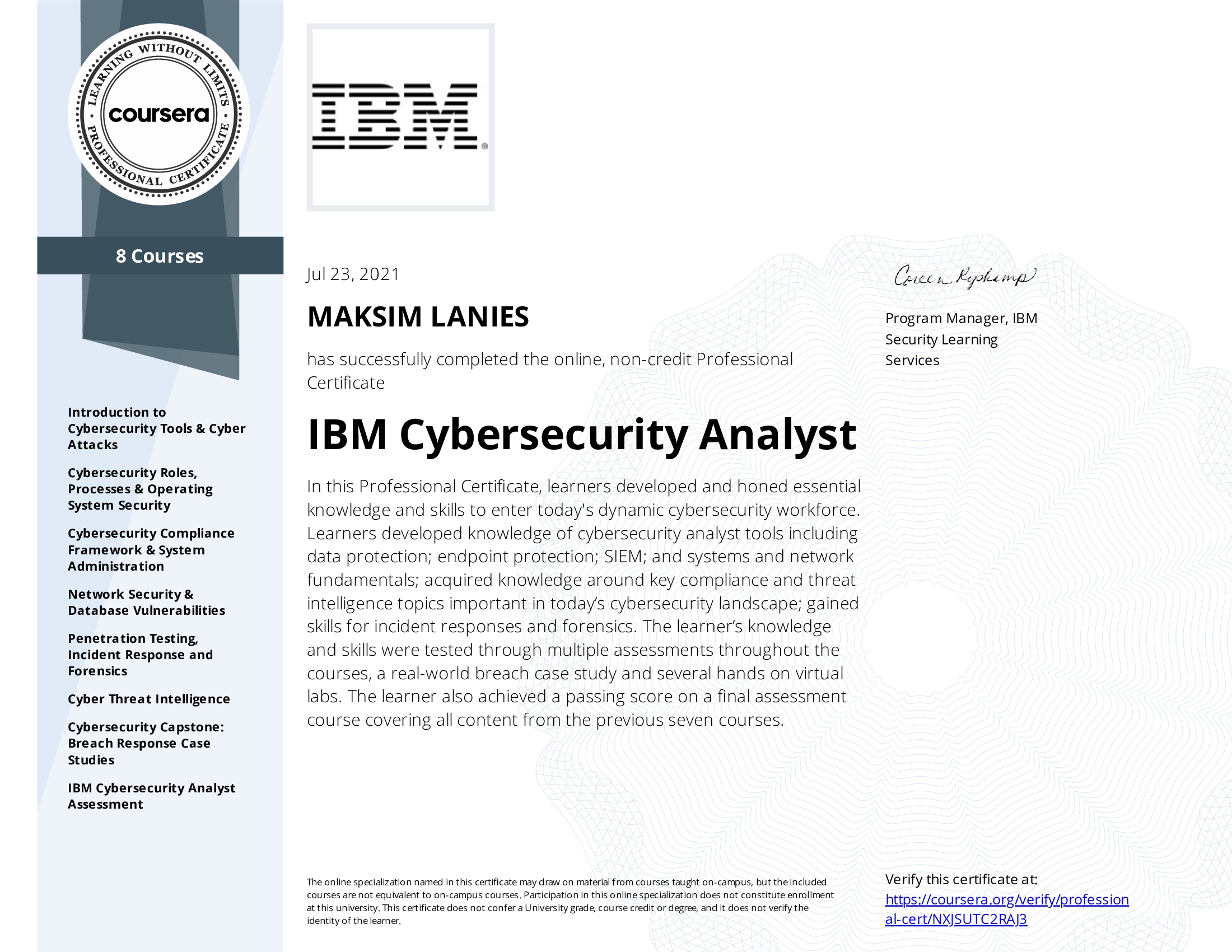
Figure 4: IBM Cybersecurity Analyst Professional Certificate, Coursera, verified at the link above.